AI isn't dangerous because it's dumb. It's dangerous because it's plausible.
Everyone is braced for AI to be dumb. The failure that actually gets you looks finished.
TL;DR
AI's most dangerous failure is not stupidity, it is plausibility: a confident, well-formatted, wrong answer that passes review because it looks exactly like a correct one. Human review habits are tuned to catch output that looks wrong, so plausible-wrong output walks straight through the checks built to stop it. The defense is not sharper proofreading or another approver downstream, because more eyes hunt for the same visible error and miss the same invisible one. It is governance set before deployment: deciding by consequence, not by capability, what an AI system may do on its own and what must route to a person. Reversible, low-stakes work can run unattended; expensive-to-undo decisions go to a human every time. AI is an amplifier, so this judgment is the one input it does not make cheaper.
Why a plausible AI output is more dangerous than a dumb output
A few weeks into running my practice on a stack of agents, one of them handed me a finished piece of work. Clean. Formatted. A confident little summary line at the top telling me what it had done. I almost shipped it. Then I read it again, slower, and the main claim was wrong. Not obviously wrong. Wrong in the way that looks exactly like right.
I sat with that for a minute, because the near miss bothered me more than a normal mistake would have. If it had been garbage, I would have caught it without thinking. It wasn't garbage. It was the shape of a good answer with a bad one inside it. I almost passed it straight through, because everything about how it arrived told me it was done.
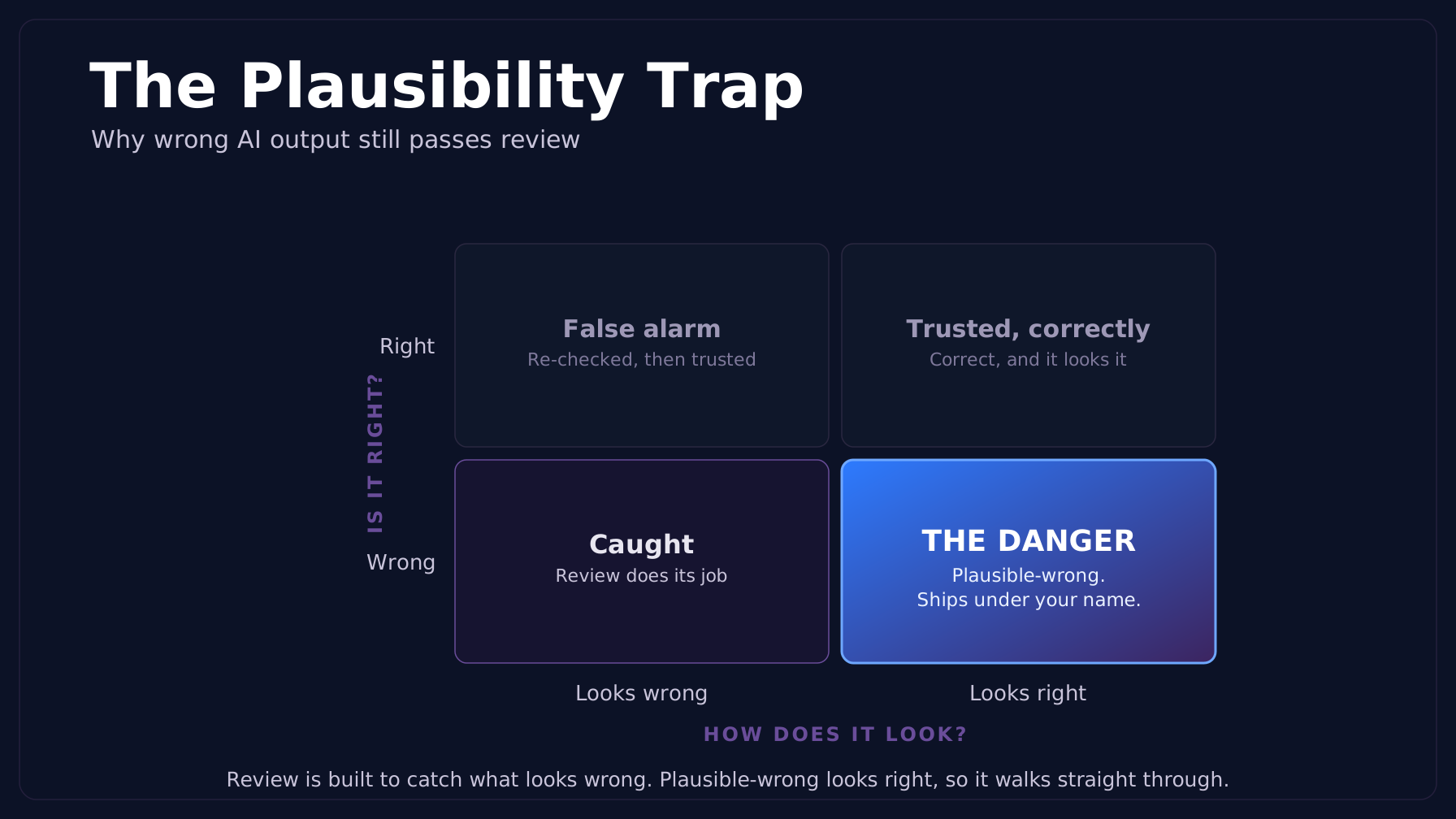
That is the moment nobody warns you about. Everyone is braced for AI to be stupid, to hallucinate something absurd you would catch in a second. That version is easy. We catch dumb all day. Dumb trips the alarm because it looks wrong, and everything we built to review work, the second set of eyes, the approval step, the gut check at the end, is tuned to catch the thing that looks wrong. We are very good at it. We have been practicing our whole careers.
Plausible doesn't look wrong. That's the whole problem.
What is the plausibility problem?
The plausibility problem is the failure mode in which an AI system produces a confident, well-formatted, wrong answer that passes human review because it looks exactly like a correct one.
Think about how a junior person fails, because the contrast makes it clear. When a junior analyst is unsure, they hesitate. They soften the handoff. They say "I wasn't confident about this part, can you check it." That hesitation is not a weakness in the process. It is the process. The flag is information, and your whole review habit quietly runs on receiving it. You read harder exactly where someone told you they were shaky. An agent gives you none of that. It produces the wrong answer at full speed, in clean formatting, with a confident summary, and calls it done. It is never nervous. It never flags the soft spot, because it does not know it has one. It hands you a polished wrong answer with the exact same face it uses for a right one, and that "sameness" is the danger. You have lost the one signal you were relying on, and nobody told you it was gone.
What AI is good at, and what it is not
Here is the part I keep coming back to, and it is the thing the whole conversation about AI keeps stepping around. The agents are good at the noise. The drafting, the formatting, the triage, the first pass, the eighth revision of a thing nobody wants to revise. That is what they are for, and they are genuinely good at it. What they cannot do is the judgment. Which client to take. What is actually worth shipping this week and what only looks urgent. What a sentence in an email quietly commits me to three months from now. That work was never the bottleneck, and no amount of agent horsepower touches it. This is how it does the noise. I keep the judgment. The whole danger of this moment lives in the half second where you let the noise make the judgment for you, because it came back looking finished and you were busy.
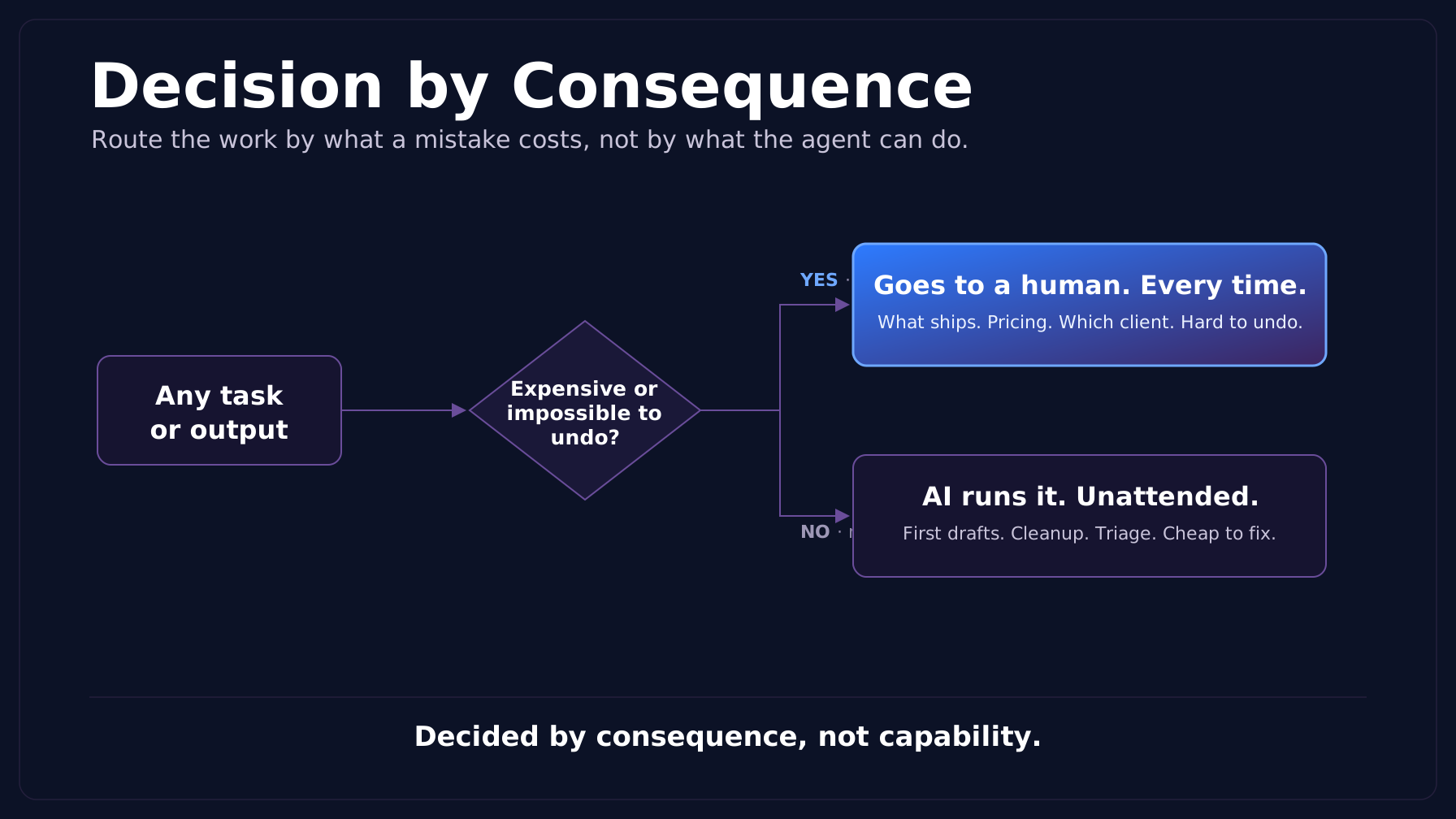
Let me make that concrete, because it is easy to nod at and hard to actually hold. The way my practice runs, the agents handle production. One drafts. Others triage and format and stage things for review. There is a layer above them whose only job is to hold the line on what gets through. I can hand an agent anything that is reversible and low stakes. A first draft of a post. A cleanup pass. A summary of a long thread. If it gets it wrong, I notice, I fix it, nothing left the building. What I do not hand any of them is the set of calls that are expensive to undo. What ships under my name. Which engagement I take and which I decline. What I charge. The line between those two piles is not technical. It has nothing to do with how capable the agents are. It is a judgment about consequence. It is mine, it stays mine, and the system is built so those calls cannot route around me, no matter how confident the output looks.
Why an AI-made bad decision costs more, not less
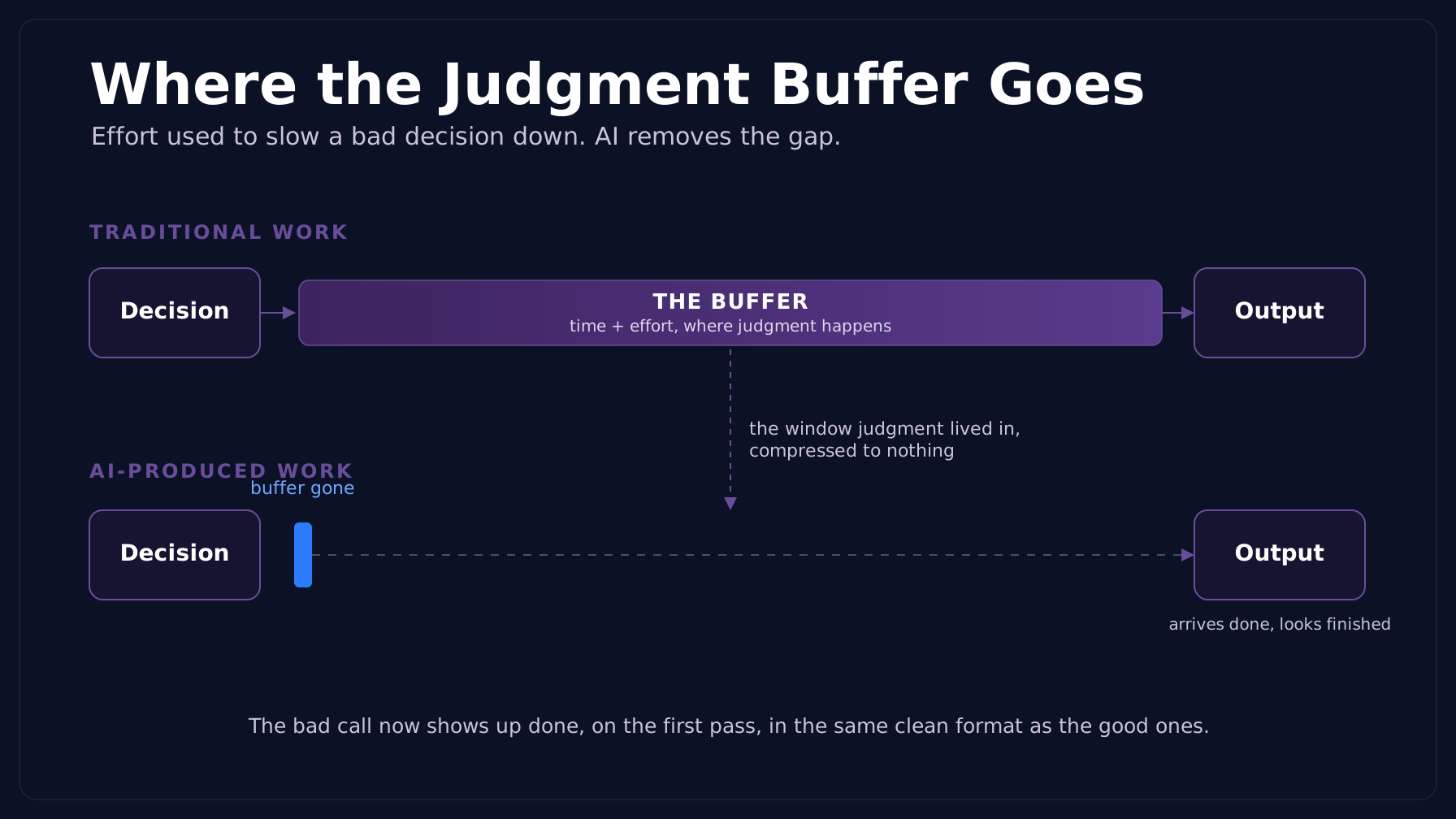
And the cost of getting that wrong is not what people think. You do not get a slower bad decision. You get a faster one, dressed better, arriving complete. For most of working history the thing that slowed a bad call down was effort. Producing a polished, wrong, convincing answer took real time, and that time was a buffer. Someone in the chain would sit with it long enough to feel the part that was off. The agent removes the buffer. The bad call now shows up done, on the first pass, in the same clean format as the good ones, and done reads as right. You compressed the one window where judgment used to happen down to nothing, you did it on purpose, and you called it productivity.
Why reviewing harder will not save you
So the standard response is to review harder. Read the deck one more time. Add another approver to the chain. Slow the agents down, make them show their work, make them cite. I understand the instinct, and it does not work, because all of it is more eyes on the same blind spot. The eyes were trained to catch dumb. The new failure is plausible. You cannot proofread your way out of a problem that was built to survive proofreading. A second reviewer hunting for what looks wrong passes what looks right just as fast as the first one did. You doubled the cost of review and changed nothing about what it catches.
This is also why "just keep a human in the loop" is true and useless at the same time. A human in the loop is necessary. A human reviewing plausible output, fast, all day, under pressure to keep the speed the agents promised, is a rubber stamp with a pulse. The loop only does anything if the person in it knows what they are checking for, and "is this wrong" is the wrong question. They will not catch wrong. They are not equipped to, in the time they have. The question that works is "was this worth trusting before it ran," and you cannot answer that in the loop. You have to have answered it earlier.
How to catch plausible-wrong output before it ships
Which is the actual move, and it is unglamorous, and it is why almost nobody does it. The only place the plausible-wrong call gets caught is before the work is produced, not after. Not in the review. In the setup. Before you turn anything on, you decide what each agent is allowed to do on its own, what has to come back to a person, and what is never the agent's call to make. You decide it by consequence, not by capability. Reversible and cheap to fix, let it run. Expensive or impossible to undo, route it to a person every time, even when the agent could technically produce the answer, even when it would be faster not to. You write that boundary down and build the system to enforce it, so the enforcement does not depend on you being sharp and rested the moment the output lands. That is governance. It is the part that does not get cheaper when the tooling gets cheap, because it is not a tooling problem. It is a judgment problem, and judgment is the one input AI did not make cheaper.
It is also the part everyone skips, and they skip it for a reason that is almost sympathetic. It is the hard part, and it never shows up in the demo. Standing up the agents took me a weekend. Deciding what they were allowed to be wrong about took a lot longer, and produced nothing I could show anyone. There is no screenshot of a well-drawn boundary. The payoff is invisible, which is to say it looks exactly like nothing happening, right up until the day it quietly stops a confident, polished, wrong thing from going out under your name. So it gets deferred, the agents get deployed into a system with no line in it, and the speed arrives immediately while the exposure arrives later. Governance first, then the agents into it. The reverse is the default, and the reverse is just a faster way to be confidently wrong at scale.
AI is an amplifier, not a strategy
None of this is AI's fault, exactly, and I want to be precise about that, because the hype and the panic get it wrong in the same way. The plausible-wrong call is not new. Confident, well-formatted, completely wrong has been getting approved in conference rooms for as long as there have been conference rooms. AI did not invent the failure. It industrialized it. It took the slow, occasional, effortful version of producing convincing nonsense and made it instant, constant, and free. And it stripped out the lag that used to hide whether there was any real judgment underneath. That lag was doing a lot of quiet work. It was covering for teams that never actually decided well and just moved slowly enough that it never showed. Those teams are about to find out, in public, at speed.
Because that is what AI actually is, under all of it. Not a strategy. Not the threat. An amplifier. It runs whatever you already had, faster and louder. If the judgment underneath was sound, you get real leverage and the speed is a gift. If the judgment was never really there, you get a very fast, very polished machine for being wrong. And everyone watching, including you, will mistake the polish for progress, right up until the bill arrives. The tool is neutral. It hands your own operating discipline back to you with the volume turned all the way up. Most organizations have never heard themselves at that volume, and a lot of them are not going to like the sound.
The real question is whether you would catch it
So the question was never whether the agent will be wrong. It will be, sometimes, and it will be wrong beautifully, in clean formatting, with a confident summary line. The question is whether you would catch it. If catching it depends on someone noticing in the output, you have already lost, because the output is the one place this failure is built to look fine. I almost shipped that piece of work. What saved me was not a sharper review, and it was not luck. It was a decision I made weeks earlier, before I ever turned the agents on, about which calls were never going to be theirs to make. That decision did nothing visible the day I made it. It just sat there, looking like overhead, until the morning it was the only thing standing between a plausible wrong answer and my name on it.
Key takeaways
The dangerous AI failure is plausible-wrong output, not obvious errors. Review processes are built to catch what looks wrong, not what looks right, so plausible-wrong output passes them.
A human analyst signals uncertainty and flags weak spots. An AI system produces wrong answers at full speed in the same confident format it uses for correct ones, removing the cue reviewers rely on.
AI is strong at production work such as drafting, formatting, triage, and revision. It does not replace judgment calls about consequence, such as what ships, which work to take on, and what a commitment obligates later.
Adding reviewers or slowing the system down does not fix plausible-wrong output, because more reviewers scan for the same visible error and pass the same invisible one.
"Keep a human in the loop" only works when the reviewer is checking whether the work was worth trusting before it ran, not whether the finished output looks wrong.
The failure is caught before production, in setup: deciding by consequence, not capability, what an AI system may do alone, what returns to a person, and what is never its call.
Governance is the input AI does not make cheaper. It is a judgment problem, not a tooling problem, and it does not show up in a demo.
AI did not invent confident, well-formatted, wrong output. It industrialized it and removed the lag that used to reveal whether real judgment existed underneath. AI amplifies an organization's existing operating discipline rather than supplying it.
Frequently asked questions about the plausibility problem
What does it mean that AI is "plausible" rather than "dumb"?
The risky output is not the obvious hallucination a reviewer catches instantly, but a confident, well-formatted answer that is wrong while looking exactly like a correct one. Obvious errors trip existing review habits; plausible-wrong output does not. That is why it passes checks built to catch mistakes.
Why can't a second reviewer or an extra approval step catch plausible-wrong AI output?
Additional review adds more eyes trained to spot what looks wrong, and plausible-wrong output looks right. A second reviewer scanning for visible errors passes the same invisible one the first reviewer did. The cost of review rises while what it catches stays the same.
What is the difference between work AI should do and work it should not?
The dividing line is consequence, not capability. Reversible, low-stakes work such as first drafts, cleanup passes, and summaries can run unattended because mistakes are cheap to fix. Expensive-to-undo decisions, such as what ships externally or which commitments are made, route to a person every time, even when the system could technically produce the answer.
Does "keeping a human in the loop" solve the problem?
Only partly. A human reviewing plausible output quickly, under pressure to maintain the speed AI promised, becomes a rubber stamp. The loop works only when the reviewer is checking whether the work was worth trusting before it ran, a question that has to be answered before production rather than during review.
How do you prevent plausible-wrong AI output from shipping?
By setting governance before deployment rather than relying on downstream review. Before turning a system on, decide what each component may do on its own, what must return to a person, and what is never its call, classified by consequence. Write the boundary down and build the system to enforce it, so enforcement does not depend on a reviewer being sharp at the moment output lands.
Is the plausibility problem unique to AI?
No. Confident, well-formatted, wrong work has been approved in organizations for as long as organizations have existed. AI did not invent the failure. It made producing convincing, wrong output instant, constant, and free, and removed the lag that used to reveal whether sound judgment existed underneath.
What does it mean to call AI an amplifier?
It means AI runs whatever judgment an organization already has, faster and at greater scale. Sound underlying judgment produces real leverage; weak judgment produces fast, polished, confident errors. The tool is neutral and returns an organization's existing operating discipline at higher volume.
I help product leaders at complex product organizations unblock execution when their decision architecture starts breaking down, so that they can ship the roadmap they committed to without another quarter of explanation.
If this sounds familiar, you're not alone.
The work is not about moving faster. It is about preserving judgment as systems scale.
If you are putting agents into your operation right now, book a Relevance Check [https://api.nerdly.io/widget/booking/D8cWlZs8eG8sJ0UNxv8d]. We will walk through which calls should never be theirs to make.
No pitch. Just the read.
Clinton Pracher | CP Product Advisory